Wow, time files when your having fun!
Anyway my final blog entry includes both 23 and 24. There were a few points in the chapters that caught my eye.
Chapter 23 dealt with decolonization and the chapter have major sections devoted to both India and Africa. What I noticed was that in both places there was a great visionary leader who helped and was really in their moment. Of course I'm referring to Mandela in Africa and Gandhi in India. Both brought unity, spirituality and suffered very difficult battles in their struggles. They also didn't seem to want to take the helm, but rather became the helm because the people knew they were the right leaders. I have huge leadership discussions at work. One faction feels that militaristic hierarchy is leadership where I feel that when an employee says "if you ever leave, will you take me with you, I'll go anywhere with you around" the person has demonstrated leadership. Both Gandhi and Mandela demonstrated this type of leadership. How many people do you know that you'd like to follow into a new career? These are the greats....
My favorite part of chapter 24 was the picture of the Indian call center voice training course where they all were pulling their mouths with fingers creating huge smiles. Another and more important part of the chapter dealt with trade surplus and deficit countries. While most feel that if you import more than you export you are in bad shape, but might it not actually work in reverse? Don't the export surplus countries depend on our economies much more than we depend on their products. If a huge nationalism revolt strikes and we decide to buy American, a very large part of the world could be in trouble. It also feels like there is a huge upside, sort of like a PE ratio, when it is low one may be looking at opportunity. This relates directly to the topic of the American Empire. Where we haven't so much dominated via take over we have inserted friendlies in politics and pushed massive economic control in many places which may lead to a more sustained control as compared to stripping a country of resources.
Anyway, ciao, it was a please being in class with you all!
Saturday, July 17, 2010

Sunday, July 11, 2010
Die you commie pig! ch 22
Well all I'm getting a bit punchy with all of the reading. Ch 22 is on communism, the rise and fall. As a personal note, being 41 I remember the days of Gorbachev. I graduated high school in 87 and truely remember a feeling of nervousness in general. It sort of felt like the current economic tide which hopefully will wash away. I remember listening to John Lydon and Afrika Bombata's "World Destruction" and Sting's song about Killing Children. The cold war hit home, my home and being a kid and not really understanding what was going on, but understanding enough to know that both the USA and USSR could blow up the world many times over wasn't fun.
Anyway the commies fell and are continuing to fall. Being completely goverment run left them without much advancement, no competition, lately and the population a bit pissed. Hero leaders Stalin and his buddy Mao fell and their successors were soft. These new guys decollectivized farming, allowed foreign investment and had a population that could finally see what the rest of the world was doing. Hopefully things will continue to change globally for the better.
Anyway the commies fell and are continuing to fall. Being completely goverment run left them without much advancement, no competition, lately and the population a bit pissed. Hero leaders Stalin and his buddy Mao fell and their successors were soft. These new guys decollectivized farming, allowed foreign investment and had a population that could finally see what the rest of the world was doing. Hopefully things will continue to change globally for the better.
Ch 21 - TMI
So where to start...
Triple alliance east or west?
WWI and US getting involved as shipping lanes were jammed by The Fatherland?
Facism?
Fall of Europe?
Marshall New Deal?
Germany having to pay reparations for war and pissed off because of it bringing on a new Socialist party...Sig Heil anyone?
Japan returning to the Japanese way?
WWII deliberate and planned Japan angry with US over trade and racial issues Germany just psycho?
Oh, ha that kind of just sums it up!
Triple alliance east or west?
WWI and US getting involved as shipping lanes were jammed by The Fatherland?
Facism?
Fall of Europe?
Marshall New Deal?
Germany having to pay reparations for war and pissed off because of it bringing on a new Socialist party...Sig Heil anyone?
Japan returning to the Japanese way?
WWII deliberate and planned Japan angry with US over trade and racial issues Germany just psycho?
Oh, ha that kind of just sums it up!
Saturday, July 10, 2010
Ch 20 - Cooperation
One item I found noteworthy in chapter 20 related to cooperation, might also be footnoted a bit as greed...
As the Europeans we colonizing the world one who sought domncance in his country might enlist them to help him out, this help spread the pervasive colonization. Another subsection of this were some countries who were better negotiators who knew their time would be soon up and so began to negotiate with the future colonizers. Siam and Ethiopia were mentioned specifically. By doing so the rulars may essentially stay in power.
One benefit the countries received was jobs. When the colonization took place the Eu countries didn't resource completely and so many people found good paying and even presitgious jobs working for the new rulers. an Example is French West AFrica where only 385 French adminstrators were in place and 50,000 tribal chiefs had the opportunity to help out.
Unfortunately form everything else I've seen or read the Europeans did little to help and really stirpped Africa of its resources and left it in ruins.
As the Europeans we colonizing the world one who sought domncance in his country might enlist them to help him out, this help spread the pervasive colonization. Another subsection of this were some countries who were better negotiators who knew their time would be soon up and so began to negotiate with the future colonizers. Siam and Ethiopia were mentioned specifically. By doing so the rulars may essentially stay in power.
One benefit the countries received was jobs. When the colonization took place the Eu countries didn't resource completely and so many people found good paying and even presitgious jobs working for the new rulers. an Example is French West AFrica where only 385 French adminstrators were in place and 50,000 tribal chiefs had the opportunity to help out.
Unfortunately form everything else I've seen or read the Europeans did little to help and really stirpped Africa of its resources and left it in ruins.
Ch 18 - Unions
I've always wondered where unions originated from. Chapter 18 describes what might be the answer.
Early British industrialization in agriculture in forms of rotating crops, higher yielding seeds, etc allowed for more people to become aritsans rather than agricultural workers. These artisans solowing started forming groups of like crafts. These groups began to collect dues that would help cover their community in case of illness and funeral costs. This essentially was the beginning stages of the unions.
As these unions grew they began to have wage bargaining power protecting the workers from oppressive bosses.
Early British industrialization in agriculture in forms of rotating crops, higher yielding seeds, etc allowed for more people to become aritsans rather than agricultural workers. These artisans solowing started forming groups of like crafts. These groups began to collect dues that would help cover their community in case of illness and funeral costs. This essentially was the beginning stages of the unions.
As these unions grew they began to have wage bargaining power protecting the workers from oppressive bosses.
Chapter 17 needs to go to a 12 step program (on and on and on)
Does anyone feel the same way I do when I read the chapters? They seem to be very interesting have a very nice start then climax. The chapter appears to be coming to an end and then drags out for about 10 more pages. Now this guy Strayer is a much better writer than I and it is easy to be a critic, but this chapter in particular caught a case of on and on and on. I think the chapters should be split up. The revolutions described included the American, French, Haitian and Spanish American the part the is of course related but drug on for me was the feminist movement, abolition of slavery and nationalism. Whatever...
Anyway one piece of the puzzzle that came clear to me in the chapter was that while the American Revolution was insturmental in others it just didn't quite work out the same way. Some of the major differences between American and French were the in fighting. The American revolution seemed to have a purpose stop the Brits from taxing us the French Revolution was a class fight so they were all fighting each other. Rich trying to keep their power and the poor for equal rights. The Haitian revolutions was a success for them but moved slavery to Cuba and the South. The Spanish American was really a rularless fight with infighting. After Napolean had conquered Spain and Portugal the South Americans didn't have an oppressive leadership anymore and were really forced into a revolution.
Interesting how a similar idea with different circumstances resulted in such varied results. Remember "nothing but freedom"
Anyway one piece of the puzzzle that came clear to me in the chapter was that while the American Revolution was insturmental in others it just didn't quite work out the same way. Some of the major differences between American and French were the in fighting. The American revolution seemed to have a purpose stop the Brits from taxing us the French Revolution was a class fight so they were all fighting each other. Rich trying to keep their power and the poor for equal rights. The Haitian revolutions was a success for them but moved slavery to Cuba and the South. The Spanish American was really a rularless fight with infighting. After Napolean had conquered Spain and Portugal the South Americans didn't have an oppressive leadership anymore and were really forced into a revolution.
Interesting how a similar idea with different circumstances resulted in such varied results. Remember "nothing but freedom"
Sunday, June 20, 2010
Chapter 16 Religion and Science
Chapter 16 deals with the continued struggle, domination and emergence of the world's religions and the impact of science.
Two items of particular note for me were:
Religion:
Emergence of the Protestant arm of Christianity. Martin Luther, amongst many others, was essentially pissed off at the wealth the Catholic religion was demonstrating. Popes, bishops etc were living lavish lifestyles, which he observed was much different than their teachings. He wrote a memo stating such and had 93 statements within the memo. This spawned a new Christian arm that believed more in the determination of the meaning of the Bible by individuals not the church and its structure. This new arm spurred many new forms of Christianity including, Lutharans, Anglicans and Quakers amongst many others.
Science:
The main reason the book states that the Islamic nations didn't lead the way with modern science after their already impressive work in mathematics and astronomy is the structure. Islamic teachings were very formalized while the European schools were very anonymous. They licensed their own teachers and began their own forms of teaching and thinking. By doing this they were allowed to explore in an uninhibited environment.
See you all tomorrow.
Two items of particular note for me were:
Religion:
Emergence of the Protestant arm of Christianity. Martin Luther, amongst many others, was essentially pissed off at the wealth the Catholic religion was demonstrating. Popes, bishops etc were living lavish lifestyles, which he observed was much different than their teachings. He wrote a memo stating such and had 93 statements within the memo. This spawned a new Christian arm that believed more in the determination of the meaning of the Bible by individuals not the church and its structure. This new arm spurred many new forms of Christianity including, Lutharans, Anglicans and Quakers amongst many others.
Science:
The main reason the book states that the Islamic nations didn't lead the way with modern science after their already impressive work in mathematics and astronomy is the structure. Islamic teachings were very formalized while the European schools were very anonymous. They licensed their own teachers and began their own forms of teaching and thinking. By doing this they were allowed to explore in an uninhibited environment.
See you all tomorrow.
Were the spices that good or the food that bad?
Chapter 15 deals with international commerce, which really means trading with Asia for spices, silks and other things. Now Europe didn't really have anything worth trading at the time so with the sacking of the Americas for Silver they now had something to trade.
The spices must have been awesome for the Portuguese and other European countries set up trading outpost in the Indian sea lanes which they ofter took by force. With the early withdrawal of Zheng He's naval force it was the wild West, or East in this case, and the European decided that someone would take control. Why not it be them. Essentially the Europeans took control of areas in SE Asia, E Africa and S India to establish their trading prowess.
It is odd that these goods the were seeking were in such high demand, but I guess we currently have domesticated foods and easy retrieval of anything we'd like so it is really hard to tell what worth is in a time like this.
Anyway, hopefully their food tasted much better and it was all worth it!
The spices must have been awesome for the Portuguese and other European countries set up trading outpost in the Indian sea lanes which they ofter took by force. With the early withdrawal of Zheng He's naval force it was the wild West, or East in this case, and the European decided that someone would take control. Why not it be them. Essentially the Europeans took control of areas in SE Asia, E Africa and S India to establish their trading prowess.
It is odd that these goods the were seeking were in such high demand, but I guess we currently have domesticated foods and easy retrieval of anything we'd like so it is really hard to tell what worth is in a time like this.
Anyway, hopefully their food tasted much better and it was all worth it!
Chapter 14 - colonization and the Americas
Chapter 14 is, to me, the most interesting chapter of the text as it begins to explore our country. It explains how the Native Americans were greatly affected by the European settlers and how Europe was pushed forward by this colonization.
When settlers came to the North East they brought with them many things. Among them were domesticated animals which flourished in NA due to lack of predators. They also brought disease. Apparently 90% of the Native Americans perished due to the diseases brought by the Europeans. As the Indians had no immune system built for the new problems they were in big trouble. We often hear about the cowboys killing off the Indians but his chapter suggests it was much worse from disease. I've taken some classes on Native American culture and it is a real shame to have lost most of these rich cultures.
The chapter amongst many other items references the fact that modernization and metals were brought back to the European communities which helped them advance and ward off the early dominance of the East.
Of course, a major section of the chapter deals with slavery and how blacks were looked upon differently in several countries. Blacks were basically all the same here, even mulattoes, while in other countries mulattoes that had gained land were passed off as white.
The US was divided into a few areas of rule, mainly French and English with the French controlling much of the center of the states and the English parts of Canada and the south. Spanish rule was mainly seen in the now Mexican part of NA. It seemed that the settled areas were more aligned with the controlling countries rather than ruled by them.
When settlers came to the North East they brought with them many things. Among them were domesticated animals which flourished in NA due to lack of predators. They also brought disease. Apparently 90% of the Native Americans perished due to the diseases brought by the Europeans. As the Indians had no immune system built for the new problems they were in big trouble. We often hear about the cowboys killing off the Indians but his chapter suggests it was much worse from disease. I've taken some classes on Native American culture and it is a real shame to have lost most of these rich cultures.
The chapter amongst many other items references the fact that modernization and metals were brought back to the European communities which helped them advance and ward off the early dominance of the East.
Of course, a major section of the chapter deals with slavery and how blacks were looked upon differently in several countries. Blacks were basically all the same here, even mulattoes, while in other countries mulattoes that had gained land were passed off as white.
The US was divided into a few areas of rule, mainly French and English with the French controlling much of the center of the states and the English parts of Canada and the south. Spanish rule was mainly seen in the now Mexican part of NA. It seemed that the settled areas were more aligned with the controlling countries rather than ruled by them.
Saturday, June 12, 2010
Columbus and Zheng He Chapter 15
Chapter 13 covers a lot of ground, basically spanning the globe during the 15th century. The chapter is so broad I'm just going to focus on one area I thought interesting which was the stories and comparisons of Columbus and China's Zheng He.
Columbus with three small ships and 90 people began the new world of America. Following on the footsteps of the discovery of America there was the start the slave trade and the eradication of American Indians through killings and disease. The European maritime fleet went to find riches, convert folks to Christianity and expand their empires.
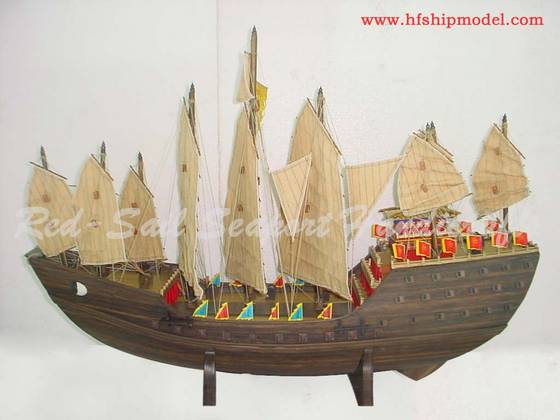
China's fleet and output was much different. 300 ships with 27,000 people under the leadership of a Royal eunuch Zheng He. A model of one of Zheng He's ship is in the below link. His treasure whip was over 400 feet long and had thousands of people aboard. The text says that all of Columbus' and De Gamma's ships could have fit on the deck of one of Z. He's ships. China's fleet was recalled after 30 year's due to the death of the supporting/sponsoring Emporer Yongle. The general Chinese idea was that if they needed something someone would bring it to them.
I wonder what modern society would be like if the Chinese fleet went beyond their local area with an intent on colonization and discovery? I have a feeling that with the armada the size it was they might have amassed much of the western world had they chosen to.
http://image.ec21.com/image/hfshipm/oimg_GC00776624_CA00879566/ZhengHe.jpg
See you all Monday
Columbus with three small ships and 90 people began the new world of America. Following on the footsteps of the discovery of America there was the start the slave trade and the eradication of American Indians through killings and disease. The European maritime fleet went to find riches, convert folks to Christianity and expand their empires.
China's fleet and output was much different. 300 ships with 27,000 people under the leadership of a Royal eunuch Zheng He. A model of one of Zheng He's ship is in the below link. His treasure whip was over 400 feet long and had thousands of people aboard. The text says that all of Columbus' and De Gamma's ships could have fit on the deck of one of Z. He's ships. China's fleet was recalled after 30 year's due to the death of the supporting/sponsoring Emporer Yongle. The general Chinese idea was that if they needed something someone would bring it to them.
I wonder what modern society would be like if the Chinese fleet went beyond their local area with an intent on colonization and discovery? I have a feeling that with the armada the size it was they might have amassed much of the western world had they chosen to.
http://image.ec21.com/image/hfshipm/oimg_GC00776624_CA00879566/ZhengHe.jpg
See you all Monday
Nomadic Pastoralism - http://www.youtube.com/watch?v=eLgg9KotKfg
I found this video on YouTube on the last nomadic pastoralist group. They are called the Rabari and are from Northern India. This tribe isn't identified but does demonstrate the lifestyle. I don't know how much has changed over the years as they seem a bit underdeveloped themselves. About minute 6 a women is making a carrying cradle for baby sheep and goats atop a camel, what a trip.
It seems like such a hard lifestyle. The picture on page 341 of the text shows a Masai woman bending over to milk her goat with a child on her back, ouch!
The pastoralists seem to be one the main vehicles for the transfer of Islam. While many educated merchants spoke Arabic and were Muslim others were attracted to their lifestyle and wanted to be able to trade better with them. Anywho, this seem s to follow many of the paths shown in the book regarding the growth of Islam.
On the other hand were the warring tribes. It appears that there were many fighting tribes who were united by Khan. The Mongols, seemingly the most advanced pastoralist group were a bunch of serious fighters. Khan fought at the forefront of battle and said that if people submit to them they will be spared, but if they resist they, their children and dependents will all be massacred. Khan had amassed an enormous empire and the group was quite wealthy from all of its takings. He had conquered East to China, North to Russia and West to Baghdad.
One more chapter, weeeheeeeeeeeeeee
It seems like such a hard lifestyle. The picture on page 341 of the text shows a Masai woman bending over to milk her goat with a child on her back, ouch!
The pastoralists seem to be one the main vehicles for the transfer of Islam. While many educated merchants spoke Arabic and were Muslim others were attracted to their lifestyle and wanted to be able to trade better with them. Anywho, this seem s to follow many of the paths shown in the book regarding the growth of Islam.
On the other hand were the warring tribes. It appears that there were many fighting tribes who were united by Khan. The Mongols, seemingly the most advanced pastoralist group were a bunch of serious fighters. Khan fought at the forefront of battle and said that if people submit to them they will be spared, but if they resist they, their children and dependents will all be massacred. Khan had amassed an enormous empire and the group was quite wealthy from all of its takings. He had conquered East to China, North to Russia and West to Baghdad.
One more chapter, weeeheeeeeeeeeeee
The Kaaba - http://caravanofdreams.files.wordpress.com/2009/09/kaaba2.jpg
Chapter 11 deals with the emergence of Islam.
I posted a link which points to the Kaaba (the word none of us could remember during class). The Kaaba is the giant cube in Mecca. In the days preceding Muhammad the Kaaba contained over three hundred images of religious icons. Once Mohammed's rule took Mecca it was replaced by one.
As described in the book, prayers in Islam were originally pointed towards Jerusalem, this direction was later modified and all prayers point towards Mecca now.
Muhammad was born in Mecca and like Buddha and Jesus we went on a sort of sabbatical where he gained his insight. His teachings were much different than Jesus who worked in concert with the State, he was the State. There was no distinction between religion and law, all was based on the religious law which crossed countries and nationalities.
This belief system spread throughout the Middle East and Asia and currently contains 22% of the world's population.
I posted a link which points to the Kaaba (the word none of us could remember during class). The Kaaba is the giant cube in Mecca. In the days preceding Muhammad the Kaaba contained over three hundred images of religious icons. Once Mohammed's rule took Mecca it was replaced by one.
As described in the book, prayers in Islam were originally pointed towards Jerusalem, this direction was later modified and all prayers point towards Mecca now.
Muhammad was born in Mecca and like Buddha and Jesus we went on a sort of sabbatical where he gained his insight. His teachings were much different than Jesus who worked in concert with the State, he was the State. There was no distinction between religion and law, all was based on the religious law which crossed countries and nationalities.
This belief system spread throughout the Middle East and Asia and currently contains 22% of the world's population.
Christianity vs Orthodox and the Crusades
Chapter 10 briefly describes the challenges of the Christendom third wave civilizations and their adoption/fights with religion.
Of particular note is the inter Christianity feud between the Orthodox and Roman groups. I really like that both parties had excommunicated each other and stated the others were non-believers in the right light. It is also very interesting to me that the Rus nation was searching for the correct national religion, looking to Judaism, Roman CCatholicism, Greek Orthodoxy and even Islam to find the right one before finally settling on the religion of Byzantium. The book mentions that they rejected Islam due to the outlaw of the drink and that drinking was part of their society. Maybe this is were the original Fraternity was established?
Anywho, the Crusades make what I feel is one of the most important pieces of world history. The infighting between religions has and will always be as source of contention. When the belief of fighting for for a higher cause than nationalistic ideals and death during the fight may bring one to their God there is no slowing the fight. Absolute willingness to die for your cause and gaining salvation through it is one heck of a motivator!
Of particular note is the inter Christianity feud between the Orthodox and Roman groups. I really like that both parties had excommunicated each other and stated the others were non-believers in the right light. It is also very interesting to me that the Rus nation was searching for the correct national religion, looking to Judaism, Roman CCatholicism, Greek Orthodoxy and even Islam to find the right one before finally settling on the religion of Byzantium. The book mentions that they rejected Islam due to the outlaw of the drink and that drinking was part of their society. Maybe this is were the original Fraternity was established?
Anywho, the Crusades make what I feel is one of the most important pieces of world history. The infighting between religions has and will always be as source of contention. When the belief of fighting for for a higher cause than nationalistic ideals and death during the fight may bring one to their God there is no slowing the fight. Absolute willingness to die for your cause and gaining salvation through it is one heck of a motivator!
http://www.youtube.com/watch?v=H_FYM2Y4AR4
Gang-
Check out this video on YouTube. Cut and paste it into your browser. I saw this some time ago and was shocked. It demonstrates the ancient art of foot binding in China.
This is described in chapter 9 as a way the women were kept in the houses and could complete with the concubines of the men. The chapter briefly describes how the Confucian writers began to push the idea that women should support the men become secondary citizens.
I can't help but notice through the book how women's roles changed throughout history. Plow horse harnesses and Confucianism amongst other things seem to be major contributors.
Check out this video on YouTube. Cut and paste it into your browser. I saw this some time ago and was shocked. It demonstrates the ancient art of foot binding in China.
This is described in chapter 9 as a way the women were kept in the houses and could complete with the concubines of the men. The chapter briefly describes how the Confucian writers began to push the idea that women should support the men become secondary citizens.
I can't help but notice through the book how women's roles changed throughout history. Plow horse harnesses and Confucianism amongst other things seem to be major contributors.
Trade Routes
As I'm plowing through the reading, like the rest of everyone I thought I make a comment on chapter 8 and the trade routes. I mean what a bunch of crazy bastards!
Could you even imagine grabbing a bunch of camels with your buddies and deciding it a good idea to haul across the Sahara to trade? I mean a 70 day journey across one of the worst environments in the world just doesn't sound like much fun to me. I think the original trader must have been a billionaire. Think of the sales job with your buddies..."Hey guys I've got a really cool idea. Lets grab a bunch of those big animals and our worldly wealth and head off over the big sand dunes. Odds of us making it are basically nil, but won't it be fun!"
Anyway this chapter was quite interesting to me from a renegade and exploration standpoint. The different routes: silk, sea and sand were all quite dangerous. I think the exploration performed by the early traders was on a monumental scale for the time. Some of the sea traders even used long open paddle boats to brave the open seas. The book didn't describe anything about bandits, but I'd imagine the route was covered in bad guys with all of the wealth being moved.
It surprises me that some of the route stops such as Java, southern India etc were such powerhouses at one time, I guess their 2000 year mission and vision statements weren't that strong.
Anyway I thought several short snippets on the readings might be more interesting than two longer pieces. More to come..
Could you even imagine grabbing a bunch of camels with your buddies and deciding it a good idea to haul across the Sahara to trade? I mean a 70 day journey across one of the worst environments in the world just doesn't sound like much fun to me. I think the original trader must have been a billionaire. Think of the sales job with your buddies..."Hey guys I've got a really cool idea. Lets grab a bunch of those big animals and our worldly wealth and head off over the big sand dunes. Odds of us making it are basically nil, but won't it be fun!"
Anyway this chapter was quite interesting to me from a renegade and exploration standpoint. The different routes: silk, sea and sand were all quite dangerous. I think the exploration performed by the early traders was on a monumental scale for the time. Some of the sea traders even used long open paddle boats to brave the open seas. The book didn't describe anything about bandits, but I'd imagine the route was covered in bad guys with all of the wealth being moved.
It surprises me that some of the route stops such as Java, southern India etc were such powerhouses at one time, I guess their 2000 year mission and vision statements weren't that strong.
Anyway I thought several short snippets on the readings might be more interesting than two longer pieces. More to come..
Thursday, June 10, 2010
Interesting show coming on Discovery
Saw a new show coming on June 20th to Discovery channel on the Hisotry of the World. It appears to look at ancient civilizations and move through to modern times. Many of the shots for the preview were similar ot the slides, from the Prof. I think I'll check it out. Blogging isn't so much for me but TV is!!!
Picture of Ur, Iraq
Hey all-
Found a pretty cool picture of Ur, Iraq. Not a new site but neat anyway. Check it out here:
Pretty cool picture or Ur, Iraq
Found a pretty cool picture of Ur, Iraq. Not a new site but neat anyway. Check it out here:
Pretty cool picture or Ur, Iraq

Monday, May 31, 2010
Chapter 6 changing role of women
I thought it very interesting and plausible how the text connected the changing role of women and the domestication of horses. The text throughout describes the women's contribution as vital in the gathering and hunting societies as they gathered about 70% of the food at the table. With the domestication of the horse however farmers were able to plow land, a chore not able to be performed with children like the earlier gathering was. Because of this the men became the farmers and contributed much more to the food at the table. At first it seemed a stretch but as the author describes the strength needed to work with the plow and how difficult it would be to lug children along it began to make some sense. After thinking about it for a while I tend to agree that this estimation could certainly be one of the primary cause in the diminishing roles of women in the early years.
Sunday, May 30, 2010
Ch #3 Post Week 1 - Agricultural revolution differences of China
While reading the text I noticed that many of the early civilizations didn't maintain the continuity of their societies except for China. The book mentions that the other early groups had higher levels of salt content from the repeated use of the land which caused diminished yields and thereby causing problems in population and food maintenance. Modern agriculture rotates crops and uses sacrifices some crops to simple grind them into the soil to replenish the nutrients of the soil. Three questions come to mind:
- Did the Chinese understand this and is that why they were able to keep their crops going so well?
- Did they bring into nutrients or other soils to replenish?
- Or were they just lucky and started growing in an area of land that was so robust it didn't need replenishment?
Subscribe to:
Posts (Atom)