Chapter 15 deals with international commerce, which really means trading with Asia for spices, silks and other things. Now Europe didn't really have anything worth trading at the time so with the sacking of the Americas for Silver they now had something to trade.
The spices must have been awesome for the Portuguese and other European countries set up trading outpost in the Indian sea lanes which they ofter took by force. With the early withdrawal of Zheng He's naval force it was the wild West, or East in this case, and the European decided that someone would take control. Why not it be them. Essentially the Europeans took control of areas in SE Asia, E Africa and S India to establish their trading prowess.
It is odd that these goods the were seeking were in such high demand, but I guess we currently have domesticated foods and easy retrieval of anything we'd like so it is really hard to tell what worth is in a time like this.
Anyway, hopefully their food tasted much better and it was all worth it!
Sunday, June 20, 2010

Chapter 14 - colonization and the Americas
Chapter 14 is, to me, the most interesting chapter of the text as it begins to explore our country. It explains how the Native Americans were greatly affected by the European settlers and how Europe was pushed forward by this colonization.
When settlers came to the North East they brought with them many things. Among them were domesticated animals which flourished in NA due to lack of predators. They also brought disease. Apparently 90% of the Native Americans perished due to the diseases brought by the Europeans. As the Indians had no immune system built for the new problems they were in big trouble. We often hear about the cowboys killing off the Indians but his chapter suggests it was much worse from disease. I've taken some classes on Native American culture and it is a real shame to have lost most of these rich cultures.
The chapter amongst many other items references the fact that modernization and metals were brought back to the European communities which helped them advance and ward off the early dominance of the East.
Of course, a major section of the chapter deals with slavery and how blacks were looked upon differently in several countries. Blacks were basically all the same here, even mulattoes, while in other countries mulattoes that had gained land were passed off as white.
The US was divided into a few areas of rule, mainly French and English with the French controlling much of the center of the states and the English parts of Canada and the south. Spanish rule was mainly seen in the now Mexican part of NA. It seemed that the settled areas were more aligned with the controlling countries rather than ruled by them.
When settlers came to the North East they brought with them many things. Among them were domesticated animals which flourished in NA due to lack of predators. They also brought disease. Apparently 90% of the Native Americans perished due to the diseases brought by the Europeans. As the Indians had no immune system built for the new problems they were in big trouble. We often hear about the cowboys killing off the Indians but his chapter suggests it was much worse from disease. I've taken some classes on Native American culture and it is a real shame to have lost most of these rich cultures.
The chapter amongst many other items references the fact that modernization and metals were brought back to the European communities which helped them advance and ward off the early dominance of the East.
Of course, a major section of the chapter deals with slavery and how blacks were looked upon differently in several countries. Blacks were basically all the same here, even mulattoes, while in other countries mulattoes that had gained land were passed off as white.
The US was divided into a few areas of rule, mainly French and English with the French controlling much of the center of the states and the English parts of Canada and the south. Spanish rule was mainly seen in the now Mexican part of NA. It seemed that the settled areas were more aligned with the controlling countries rather than ruled by them.
Saturday, June 12, 2010
Columbus and Zheng He Chapter 15
Chapter 13 covers a lot of ground, basically spanning the globe during the 15th century. The chapter is so broad I'm just going to focus on one area I thought interesting which was the stories and comparisons of Columbus and China's Zheng He.
Columbus with three small ships and 90 people began the new world of America. Following on the footsteps of the discovery of America there was the start the slave trade and the eradication of American Indians through killings and disease. The European maritime fleet went to find riches, convert folks to Christianity and expand their empires.
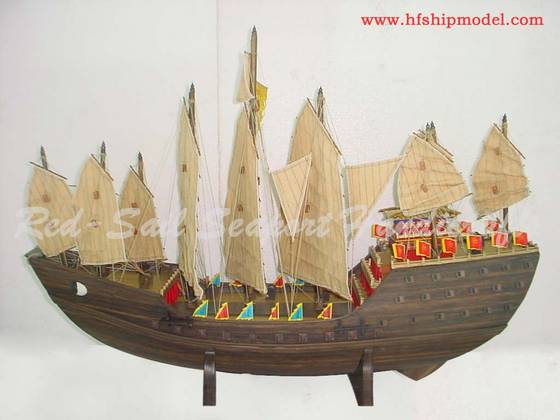
China's fleet and output was much different. 300 ships with 27,000 people under the leadership of a Royal eunuch Zheng He. A model of one of Zheng He's ship is in the below link. His treasure whip was over 400 feet long and had thousands of people aboard. The text says that all of Columbus' and De Gamma's ships could have fit on the deck of one of Z. He's ships. China's fleet was recalled after 30 year's due to the death of the supporting/sponsoring Emporer Yongle. The general Chinese idea was that if they needed something someone would bring it to them.
I wonder what modern society would be like if the Chinese fleet went beyond their local area with an intent on colonization and discovery? I have a feeling that with the armada the size it was they might have amassed much of the western world had they chosen to.
http://image.ec21.com/image/hfshipm/oimg_GC00776624_CA00879566/ZhengHe.jpg
See you all Monday
Columbus with three small ships and 90 people began the new world of America. Following on the footsteps of the discovery of America there was the start the slave trade and the eradication of American Indians through killings and disease. The European maritime fleet went to find riches, convert folks to Christianity and expand their empires.
China's fleet and output was much different. 300 ships with 27,000 people under the leadership of a Royal eunuch Zheng He. A model of one of Zheng He's ship is in the below link. His treasure whip was over 400 feet long and had thousands of people aboard. The text says that all of Columbus' and De Gamma's ships could have fit on the deck of one of Z. He's ships. China's fleet was recalled after 30 year's due to the death of the supporting/sponsoring Emporer Yongle. The general Chinese idea was that if they needed something someone would bring it to them.
I wonder what modern society would be like if the Chinese fleet went beyond their local area with an intent on colonization and discovery? I have a feeling that with the armada the size it was they might have amassed much of the western world had they chosen to.
http://image.ec21.com/image/hfshipm/oimg_GC00776624_CA00879566/ZhengHe.jpg
See you all Monday
Nomadic Pastoralism - http://www.youtube.com/watch?v=eLgg9KotKfg
I found this video on YouTube on the last nomadic pastoralist group. They are called the Rabari and are from Northern India. This tribe isn't identified but does demonstrate the lifestyle. I don't know how much has changed over the years as they seem a bit underdeveloped themselves. About minute 6 a women is making a carrying cradle for baby sheep and goats atop a camel, what a trip.
It seems like such a hard lifestyle. The picture on page 341 of the text shows a Masai woman bending over to milk her goat with a child on her back, ouch!
The pastoralists seem to be one the main vehicles for the transfer of Islam. While many educated merchants spoke Arabic and were Muslim others were attracted to their lifestyle and wanted to be able to trade better with them. Anywho, this seem s to follow many of the paths shown in the book regarding the growth of Islam.
On the other hand were the warring tribes. It appears that there were many fighting tribes who were united by Khan. The Mongols, seemingly the most advanced pastoralist group were a bunch of serious fighters. Khan fought at the forefront of battle and said that if people submit to them they will be spared, but if they resist they, their children and dependents will all be massacred. Khan had amassed an enormous empire and the group was quite wealthy from all of its takings. He had conquered East to China, North to Russia and West to Baghdad.
One more chapter, weeeheeeeeeeeeeee
It seems like such a hard lifestyle. The picture on page 341 of the text shows a Masai woman bending over to milk her goat with a child on her back, ouch!
The pastoralists seem to be one the main vehicles for the transfer of Islam. While many educated merchants spoke Arabic and were Muslim others were attracted to their lifestyle and wanted to be able to trade better with them. Anywho, this seem s to follow many of the paths shown in the book regarding the growth of Islam.
On the other hand were the warring tribes. It appears that there were many fighting tribes who were united by Khan. The Mongols, seemingly the most advanced pastoralist group were a bunch of serious fighters. Khan fought at the forefront of battle and said that if people submit to them they will be spared, but if they resist they, their children and dependents will all be massacred. Khan had amassed an enormous empire and the group was quite wealthy from all of its takings. He had conquered East to China, North to Russia and West to Baghdad.
One more chapter, weeeheeeeeeeeeeee
The Kaaba - http://caravanofdreams.files.wordpress.com/2009/09/kaaba2.jpg
Chapter 11 deals with the emergence of Islam.
I posted a link which points to the Kaaba (the word none of us could remember during class). The Kaaba is the giant cube in Mecca. In the days preceding Muhammad the Kaaba contained over three hundred images of religious icons. Once Mohammed's rule took Mecca it was replaced by one.
As described in the book, prayers in Islam were originally pointed towards Jerusalem, this direction was later modified and all prayers point towards Mecca now.
Muhammad was born in Mecca and like Buddha and Jesus we went on a sort of sabbatical where he gained his insight. His teachings were much different than Jesus who worked in concert with the State, he was the State. There was no distinction between religion and law, all was based on the religious law which crossed countries and nationalities.
This belief system spread throughout the Middle East and Asia and currently contains 22% of the world's population.
I posted a link which points to the Kaaba (the word none of us could remember during class). The Kaaba is the giant cube in Mecca. In the days preceding Muhammad the Kaaba contained over three hundred images of religious icons. Once Mohammed's rule took Mecca it was replaced by one.
As described in the book, prayers in Islam were originally pointed towards Jerusalem, this direction was later modified and all prayers point towards Mecca now.
Muhammad was born in Mecca and like Buddha and Jesus we went on a sort of sabbatical where he gained his insight. His teachings were much different than Jesus who worked in concert with the State, he was the State. There was no distinction between religion and law, all was based on the religious law which crossed countries and nationalities.
This belief system spread throughout the Middle East and Asia and currently contains 22% of the world's population.
Christianity vs Orthodox and the Crusades
Chapter 10 briefly describes the challenges of the Christendom third wave civilizations and their adoption/fights with religion.
Of particular note is the inter Christianity feud between the Orthodox and Roman groups. I really like that both parties had excommunicated each other and stated the others were non-believers in the right light. It is also very interesting to me that the Rus nation was searching for the correct national religion, looking to Judaism, Roman CCatholicism, Greek Orthodoxy and even Islam to find the right one before finally settling on the religion of Byzantium. The book mentions that they rejected Islam due to the outlaw of the drink and that drinking was part of their society. Maybe this is were the original Fraternity was established?
Anywho, the Crusades make what I feel is one of the most important pieces of world history. The infighting between religions has and will always be as source of contention. When the belief of fighting for for a higher cause than nationalistic ideals and death during the fight may bring one to their God there is no slowing the fight. Absolute willingness to die for your cause and gaining salvation through it is one heck of a motivator!
Of particular note is the inter Christianity feud between the Orthodox and Roman groups. I really like that both parties had excommunicated each other and stated the others were non-believers in the right light. It is also very interesting to me that the Rus nation was searching for the correct national religion, looking to Judaism, Roman CCatholicism, Greek Orthodoxy and even Islam to find the right one before finally settling on the religion of Byzantium. The book mentions that they rejected Islam due to the outlaw of the drink and that drinking was part of their society. Maybe this is were the original Fraternity was established?
Anywho, the Crusades make what I feel is one of the most important pieces of world history. The infighting between religions has and will always be as source of contention. When the belief of fighting for for a higher cause than nationalistic ideals and death during the fight may bring one to their God there is no slowing the fight. Absolute willingness to die for your cause and gaining salvation through it is one heck of a motivator!
http://www.youtube.com/watch?v=H_FYM2Y4AR4
Gang-
Check out this video on YouTube. Cut and paste it into your browser. I saw this some time ago and was shocked. It demonstrates the ancient art of foot binding in China.
This is described in chapter 9 as a way the women were kept in the houses and could complete with the concubines of the men. The chapter briefly describes how the Confucian writers began to push the idea that women should support the men become secondary citizens.
I can't help but notice through the book how women's roles changed throughout history. Plow horse harnesses and Confucianism amongst other things seem to be major contributors.
Check out this video on YouTube. Cut and paste it into your browser. I saw this some time ago and was shocked. It demonstrates the ancient art of foot binding in China.
This is described in chapter 9 as a way the women were kept in the houses and could complete with the concubines of the men. The chapter briefly describes how the Confucian writers began to push the idea that women should support the men become secondary citizens.
I can't help but notice through the book how women's roles changed throughout history. Plow horse harnesses and Confucianism amongst other things seem to be major contributors.
Subscribe to:
Posts (Atom)